Behind the Vines: How the Magic of Jungle Casino Games Actually Gets Made
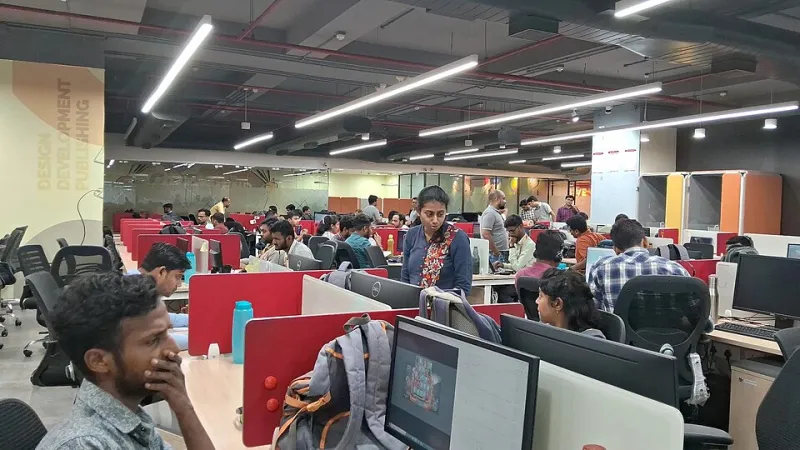
Photo: Red Apple Learning, CC BY-SA 4.0, via Wikimedia Commons
You load up a slot, and within seconds you're surrounded by the chorus of cicadas, dappled light filtering through a dense forest canopy, and a jaguar eyeing you from the reels. It feels effortless — but that seamlessness is the result of months of painstaking creative work by teams of designers, sound engineers, mathematicians, and storytellers.
At JungliWin, the jungle isn't just a visual theme slapped over a standard five-reel grid. It's a fully constructed world. So how exactly does that world get built?
It All Starts With a Story
Before a single pixel gets drawn or a line of code gets written, the best game studios start with a narrative question: Where are we, and why does it matter?
For jungle-themed games, that question opens up a genuinely vast creative space. Are we in the dense rainforests of Borneo? The sun-scorched savanna of the Serengeti? A mystical Mayan jungle temple overgrown with centuries of vines? Each setting carries its own visual language, its own colour palette, and its own emotional register.
Game designers — many of whom come from backgrounds in animation, film, and graphic arts — spend considerable time in what the industry calls the "concept phase." This involves building mood boards, researching real wildlife and ecosystems, and sketching character concepts before anything gets locked in. The goal is specificity. A generic "jungle" feels flat. A game set in the twilight hours of a Southeast Asian rainforest, where fireflies light the reels and distant thunder rolls across the background, feels like somewhere real.
The Visual Build: More Than Pretty Pixels
Once the concept is locked, the art department gets to work — and this is where things get genuinely fascinating.
Modern jungle-themed casino games are typically built using a combination of hand-illustrated assets and 3D rendering software. Character symbols — think exotic birds, prowling leopards, ancient totems — are often drawn by hand first, then digitised and rigged for animation. The best studios invest heavily in making sure animals move the way animals actually move. A poorly animated parrot flapping its wings in a robotic loop breaks the immersion immediately. A beautifully rendered macaw that ruffles its feathers when it lands on a winning payline? That's the kind of detail players remember.
Background environments are frequently built in layers — a technique borrowed from traditional animation — so that foreground elements like swaying ferns and falling leaves move independently from the midground and the sky. This parallax effect creates a convincing sense of depth even on a flat screen, making the world feel genuinely three-dimensional.
Colour choices are deliberate, too. Jungle-themed games tend to lean into rich, saturated greens and golds, punctuated by the vivid reds and blues of tropical wildlife. These aren't arbitrary aesthetic decisions — research into player psychology consistently shows that warm, high-contrast colour schemes increase engagement and create a sense of excitement and reward.
Sound Design: The Unsung Hero
Ask any experienced game developer what separates a good jungle game from a great one, and most will point to audio before visuals.
Sound design in casino games is a specialised discipline. The ambient soundscape — the background noise that plays continuously while you're on the game — has to be rich enough to feel immersive but unobtrusive enough that it doesn't become irritating over a long session. Getting that balance right takes serious work.
For jungle-themed titles, studios often work with field recordings of actual rainforests and savannas. These recordings are layered, edited, and mixed to create a composite soundscape that feels authentic without being chaotic. You might hear distant birdsong, the rustle of leaves in a breeze, the occasional low rumble of a big cat — each element placed deliberately in the stereo field to create a sense of spatial depth.
Win sounds and bonus triggers are engineered separately, designed to feel rewarding and exciting without jarring against the ambient atmosphere. The best studios treat these as musical compositions in their own right, often commissioning original scores that blend orchestral elements with authentic indigenous instrumentation.
The Tech Behind the Thrill
All of this creative work has to be built on a technical foundation that performs flawlessly across devices — and for Australian players, that increasingly means mobile.
Modern jungle casino games are built using HTML5 frameworks that allow a single game to run smoothly on desktop browsers, iOS, and Android without any compromise in visual quality. This is no small engineering feat. The same game that displays a lush, detailed rainforest on a 27-inch monitor has to look equally stunning on a 6-inch phone screen — and load quickly enough that players don't bounce before the intro animation finishes.
Game mathematics — the RTP (return to player) percentages, volatility settings, and bonus trigger frequencies — are developed in parallel with the creative build, not as an afterthought. The maths team works closely with designers to ensure that the frequency of visual rewards (animations, sound bursts, feature triggers) aligns with the mathematical model. A game that feels exciting to play is one where the audio-visual feedback loop reinforces the mathematical rhythm of the game engine.
Why Australian Studios Are Punching Above Their Weight
Australia has quietly become a genuine hub for casino game development, with studios in Sydney, Melbourne, and Brisbane producing titles that compete internationally. Part of this is talent — Australia's strong creative industries produce world-class animators, sound designers, and software engineers. But it's also cultural.
Australian players have a particular affinity for nature-themed gaming, and local studios understand that instinctively. There's a reason that wildlife imagery, from the iconic kangaroo to the vivid colours of native birds, resonates so strongly in games built for the Australian market. Local developers tap into that connection authentically in ways that offshore studios sometimes miss.
At JungliWin, that local sensibility is baked into the platform's identity. The jungle isn't just a backdrop — it's a genuine creative commitment to transporting players somewhere extraordinary. And now that you know how much work goes into building those worlds, maybe the next time a golden jaguar triggers your free spins, you'll appreciate it just a little bit more.